How Business Owners Can Plan to Take a Holiday
Disclosure: This blog may contain affiliate links or paid partnerships. I may earn compensation if you click a link or make a purchase, at no additional cost to you.
Have you, as a business owner, ever thought, "I can't remember the last time I was
on holiday?"
I coach business owners and professionals on work/life balance. In fact, I encourage them in the very first business coaching session to look at their whole life and the space the business takes up.
I ask because it tells me a lot about how a business is running.
The ultimate aim for many is, to enjoy their business now; however, when they're ready to wind down, they want it to be a sellable asset. A business's value is significantly higher when the owner isn't working full time in the business, or at all. This gives a future owner confidence that the business will still thrive after ownership has transferred. Therefore the key is to run a business where the owner can choose how much or little they wish to be in the business without getting stuck there.
Asking about this aspect of a client's life also helps me understand their values and priorities around their health, well-being, and taking time away from their business to recharge. Because if we don't have our health, we have nothing.
Most people start a business so they have control over their own timetable. It's one of the most common reasons I hear when I ask a client why they went into business.
And yet, time off is often the first thing that is delayed, sometimes avoided, and unfortunately it can stay that way for years at a stretch, usually because of a belief that the business can't afford it.
Here's what I know after years of having these conversations: taking a holiday as a sole trader or business owner is almost entirely a planning problem. Specifically, a cash flow planning problem. The good news is, you can solve it.
Five perspectives, not one
The reason why time off feels impossible is usually that it's being considered from one perspective only, normally from only a financial perspective, often without devoting time to consider it fully. Therefore that's not a planned decision. That can become a worry.
I'd suggest looking at it from five perspectives. Consider your:
1. Lifestyle
2. Finances
3. Business activity cycles
4. Communications and systems
5. The impact on your clients.
Lifestyle: what are you actually building this for?
Start here, not with the numbers. Ask yourself:
What lifestyle am I seeking through my business? Freedom? Flexibility? Time with family and friends, perhaps you're currently only seeing at Christmas.
If this question feels uncomfortable, sit with it. It's the one that can motivate you as a business owner. It's the one that permits you to keep going when the numbers look inconvenient. If the honest answer is that you want four weeks a year away from the business, then four weeks a year is a business requirement, and therefore you need to commit to it and plan it like one.
Financial: put the time off in the numbers
1. What revenue am I seeking for the business? Talk to your accountant about what the business needs to turn over to support the lifestyle you just described. Not what it turned over last year. What it needs to.
2. What personal income will I pay myself? Commit to a regular amount. This supports you and helps to manage your stress levels.
3. Then budget for both of these business and personal figures so that time away is planned into your numbers and your activities. This is the step most people skip. A holiday that isn't in the budget will, quite frankly, never happen.
Working out what your you want in business and life you can work out in Steps 3 and 4 of the Next Level Success framework.
Business activity cycles: the data already knows
This is my favourite part of the exercise, because the answer is usually already sitting in your accounting software, in your financial reports.
What are the cash flow peaks and lows in my business? Review three to five years of data to confirm it. Don’t guess. Almost every business owner I’ve worked through this with has a firm belief about their busy season, and they're often wrong about the details of when income is highest especially if they don't look at their financial reports regularly.
Are there regular low cycles where I can book annual leave? Once you can see them, the question stops being, "Can I afford to go away?" and becomes, "Which of these two windows suits me better?" That’s a much easier question, and it’s the one your data can show you.
Communications and systems: Align with your availability
Communicate your availability clearly and in advance. If you commit to four weeks off every July, mark that period as unavailable in your booking calendars immediately, not the month prior. Then your clients aren’t taken by surprise or caught off guard. This also gives them the opportunity to adjust and adapt. Plus setting appropriate boundaries for yourself and the opportunity for your clients to develop respect that you value your health and wellbeing.
This sounds simple, but it means your systems are supporting your plans. Your booking page, your calendar, your email automations, your out-of-office: communicating time away holds this important boundary while you’re not there. If your systems are patchy, your holiday will leak, and you’ll spend it answering enquiries from a hotel car park.
Worth reading alongside this: the platform I chose to begin this business ran my website, bookings and emails for the first two years your tools matter most on the weeks you’re not working.
Client impact: who covers you?
Once you’ve answered all of these questions from your point of view, consider your client’s perspective.
Could you partner with another business for reciprocal cover? They cover you in July; you cover them in June? In trade businesses, it could also be an opportunity to give an experienced, trusted staff member additional responsibilities. In service businesses, it could be: a trusted associate, a semi-retired colleague, or simply a clear protocol that tells clients what happens while you’re away and who to contact if it can’t wait.
Taking time away can damage a business when there is no plan, and it isn't communicated clearly. Success can often look boring. It is a process that is documented and shared with clients two months or more out.
And then: make no apologies.
This is the most important point. Take the time off. Celebrate it. Enjoy it.
I invite you to challenge the mindset that you can’t afford the time or the potential loss of income. With planning, you can address both. And it’s worth remembering what you set out to build: most people start a business precisely so they have control over their own timetable and their own life.
This part is often hard to do alone, I’ll be honest this is the limits of a blog post. You can read all of that, agree with all of it, and still not book the dates. I’ve watched it happen, including in my own business.
What actually moves it is having somewhere to say the plan out loud to people who will ask you about it again in a month. In our Success Community, that’s what the accountability check-ins and the quarterly planning sessions are for: a room of business owners, business development professionals and not-for-profit leaders who all run different operations and will therefore ask you questions you wouldn’t have asked yourself.
Business owners, not-for-profit leaders and business development managers all have experienced, in difference ways, the results two-weeks of silence does to a warm pipeline. You get the benefit of these multiple perspectives.
What’s harder to find is someone who’ll notice that you’ve quietly moved your holiday for the third year running and ask you why which is where a coach can support you to initiate change.
If the numbers are the part you’re stuck on, Step 4 of the Next Level Success framework, setting a breakthrough goal, is a good place to start, because aligning your business goals with your personal ones is exactly the alignment that transforms your results.
Your next step: download my free Next Level Success Roadmap. It walks through the ten steps, including the goal-setting I use with all my coaching clients. Download it, work through Step 4, and put a date in the calendar.
Not sure where to start?
The Next Level Success Roadmap is a free ten-step guide to building a business that supports the life you wanted when you started it, including the numbers work behind taking time off.

Welcome to my blog, I’m Fleur and I'm delighted you're here.
As a Business Educator and founder of Ask Fleur. I help business owners and professionals, just like you, to achieve sustainable growth without burnout by combining practical strategy with evidence-based coaching. As a Certified Success Principles Trainer and Accredited ICF Coach, I partner with you to gain clarity, build confidence, and create success on your terms.
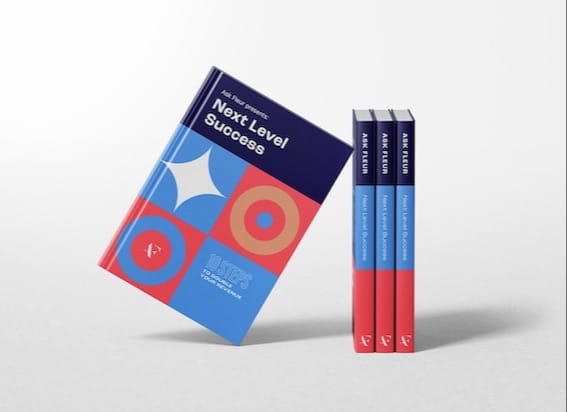
Receive my full 10 step Coaching Framework in the Next Level Success Roadmap

Subscribe to receive business articles fortnightly to level up your skills.
© 2026 Ask Fleur


© 2026 Ask Fleur